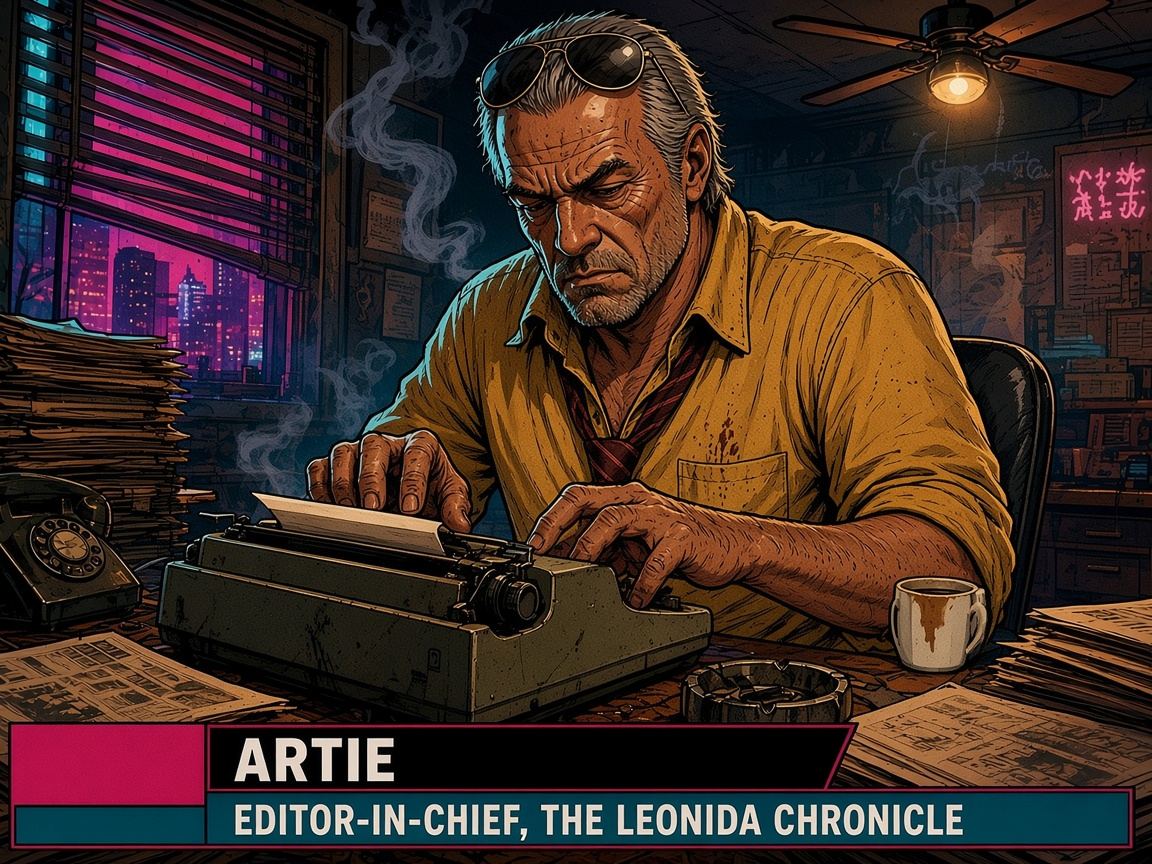
 By Artie Kowalski, Editor-in-Chief
Film camera tips
Useful 35mm advice first, Leonida second. No invented numbers. If you are searching for film camera tips for beginners, start here and ignore the part where my car needs three tries.
Learn the sunny 16 rule, then use a meter when you have one
On a clear, sunny day, set the aperture to f/16 and the shutter speed to roughly the reciprocal of your film's ISO. ISO 400 film is about 1/400 or 1/500 at f/16; ISO 200 is about 1/250. Open up one stop for thin cloud (f/11), two for overcast (f/8), and three for heavy shade (f/5.6). Bright sand or water can go the other way, toward f/22. If your camera has a working meter, use it. Sunny 16 is the backup for when the battery dies, or when you want to look at the light instead of a needle.
In bright subtropical light, start with ISO 200 or 400 color negative
Hard midday sun will make a very fast film grainier than you probably want, and it leaves slow slide film with little room for error. Color negative film at ISO 200 or 400 is the forgiving middle: enough speed for shade and late afternoon, and enough exposure latitude that a slightly wrong frame can still print. ISO 400 is the more flexible everyday choice. ISO 200 can look a little cleaner in harsh noon light. Leave slide film (E-6) and very high-speed stocks until you like your negatives.
Pushing is a lab instruction, not a guess on the dial
Pushing means you rate the film faster than box speed — ISO 400 as 800 or 1600, for example — and you tell the lab to develop it longer to compensate. You get a more usable shutter speed in low light, with more contrast and grain. Just setting a higher ISO and developing normally is underexposure, and color negative will only forgive so much of that. Black-and-white film is the more predictable stock to push; color can often take a one-stop push if the lab is willing. Write the rating on the canister before you forget, and say "push one" or "push two" when you drop the roll off.
Heat, humidity, and light leaks will ruin a roll faster than a bad meter
Do not leave film in a hot car, on a dashboard, or in a bag sitting in the sun. Heat can fog it. Humidity is hard on the emulsion and on the foam seals in a used camera. Keep spare rolls somewhere cool and dry; a sealed bag with a silica-gel pack is enough at home. Load and unload in the shade, not in direct sun. If a used SLR starts printing bright streaks along the edge of the frame, the door seals are probably perished and need replacing. Get exposed rolls developed before they sit in the heat for weeks.
Buy a used SLR for the shutter and the seals, not the story
A working manual or aperture-priority 35mm SLR with a 50mm lens is plenty. Common student cameras — a Pentax K1000, a Canon AE-1, a Nikon FM or FE, a Minolta X-700 — show up often and take film the same way. Before you pay: fire the shutter at several speeds, check that the aperture blades are clean and move, look for fungus or haze in the lens, and inspect the black foam around the film door. Budget for fresh seals, or a clean-lube-adjust if the camera has been in a cupboard. Put a fresh battery in the meter and compare it to sunny 16 on a clear day.
Scan the negatives, then keep the negatives
A lab scan is the easiest way to start. If you scan at home, a dedicated film scanner, or a digital camera with a light source and a film holder, will beat a phone on a windowsill. Get a sharp, reasonably high-resolution scan, then leave the files alone until you know what you want to print. The negative is the archive. The scan is the copy you can lose. I still get pictures back a few days late and a bit crooked, which is about right.
Hot takes
Short opinions from a broke photojournalist who types things down and then tries to explain them. None of this is a buying guide.
- Digital is fine. I just like waiting three days to find out I left the cap on.
- If the print comes back crooked, that's composition. If it comes back late, that's the lab, and I respect a deadline that isn't mine.
- Notes beat memory. Memory works for my landlord, and look how that turned out.
- The heat is not a mood. It's a storage problem. Film first, pride second.
- Don't trust a road just because a fellow swears it used to be there. Take the picture from the shoulder.
- A ceiling fan is not climate control, but it will sit still for a meter reading if you ask nicely.
- I don't chase the shot. The shot usually finds me in a car that started on the third try.
Niche EDC for the independent jorno
Everyday carry for a freelance journalist who still uses film. Nothing fancy, nothing official, and nothing I would have to replace because it looked impressive on a desk.
Prices and stock change. These links open Amazon.com.au searches for generally available tools, not official branded merch, and not logos that are not ours.
| What | Artie's note | Link |
|---|---|---|
| Notebook and a pencil | Batteries fail. Pencils do not, and they still work after a swim I did not plan. | See prices on Amazon AU |
| Extra film canisters | Empty ones hold used rolls so I don't reload the same box and have a quiet crisis at the lab. | See prices on Amazon AU |
| Lens cloth | Fingerprints look like weather. A clean microfibre cloth is cheaper than pretending they are atmosphere. | See prices on Amazon AU |
| Power bank | The camera is mechanical. The phone I use for notes and maps is not. | See prices on Amazon AU |
| Small torch | For dark doorways, for finding the rewind in a bag, and for not walking into a canal a second time. | See prices on Amazon AU |
| Multitool | Loose straps, stuck battery doors, a packet of crackers. I am not building a house. | See prices on Amazon AU |
| Rite in the Rain notebook | The weather here does not respect paper. This stuff does. | See prices on Amazon AU |
| Sling bag | One strap, camera on the hip, both hands free if a flamingo cuts the queue. | See prices on Amazon AU |
| Voice recorder | For details I will swear I would remember. I will not remember. | See prices on Amazon AU |
FAQ
Who is Artie?
Artie Kowalski is the narrator of The Leonida Chronicle: a broke, wry editor-in-chief living in Leonida. He is a fan persona, not an official character.
Are these film camera tips for the game?
No. These are real-world 35mm film photography tips for beginners. The rest of this site is a practical Grand Theft Auto VI guide. The two are neighbours, not the same desk.
What film should a beginner use in bright sun?
Start with color negative film at ISO 200 or 400. ISO 400 is the more flexible everyday choice; ISO 200 can look a little cleaner in hard midday light.
Do I need an expensive camera to start?
No. A working used 35mm SLR and a 50mm lens will teach you more than a rare collector body. Check the shutter, the lens, and the light seals before you pay.
Are the everyday-carry links affiliate links?
Yes. As an Amazon Associate, The Leonida Chronicle earns from qualifying purchases. Clicking those Amazon.com.au links may earn this site a commission at no extra cost to you.